In the wake of his hire, leaving the Mets to become a special assistant tasked with overhauling and leading White Sox international scouting operations, David Keller explained his choice in a manner that has since become commonplace.
"I came to work with Chris [Getz] specifically and for the White Sox because I believe in him as a person and I believe in his vision," Keller said. "In the short term I’ve been here, I haven’t seen anything that would change that."
Some 15 months later, as new assistant general manager Carlos Rodríguez was introduced to the media this spring after 16 seasons with the Rays, the language remained notably consistent.
"I had a bunch of conversations with Chris over time," Rodríguez said. "Just felt we are really just aligned, aligned on his vision for the organization, the people, the process in place. Kind of got caught up in just thinking about the possibilities, the upside."
The repeated invocations of Getz's vision is ironic on multiple levels, and the way White Sox GM laughs heartily at the suggestion that it makes him sound mystical in quality affirms his awareness of such.
"Well, it does sound like they were being complimentary," Getz said. "I would appreciate that."
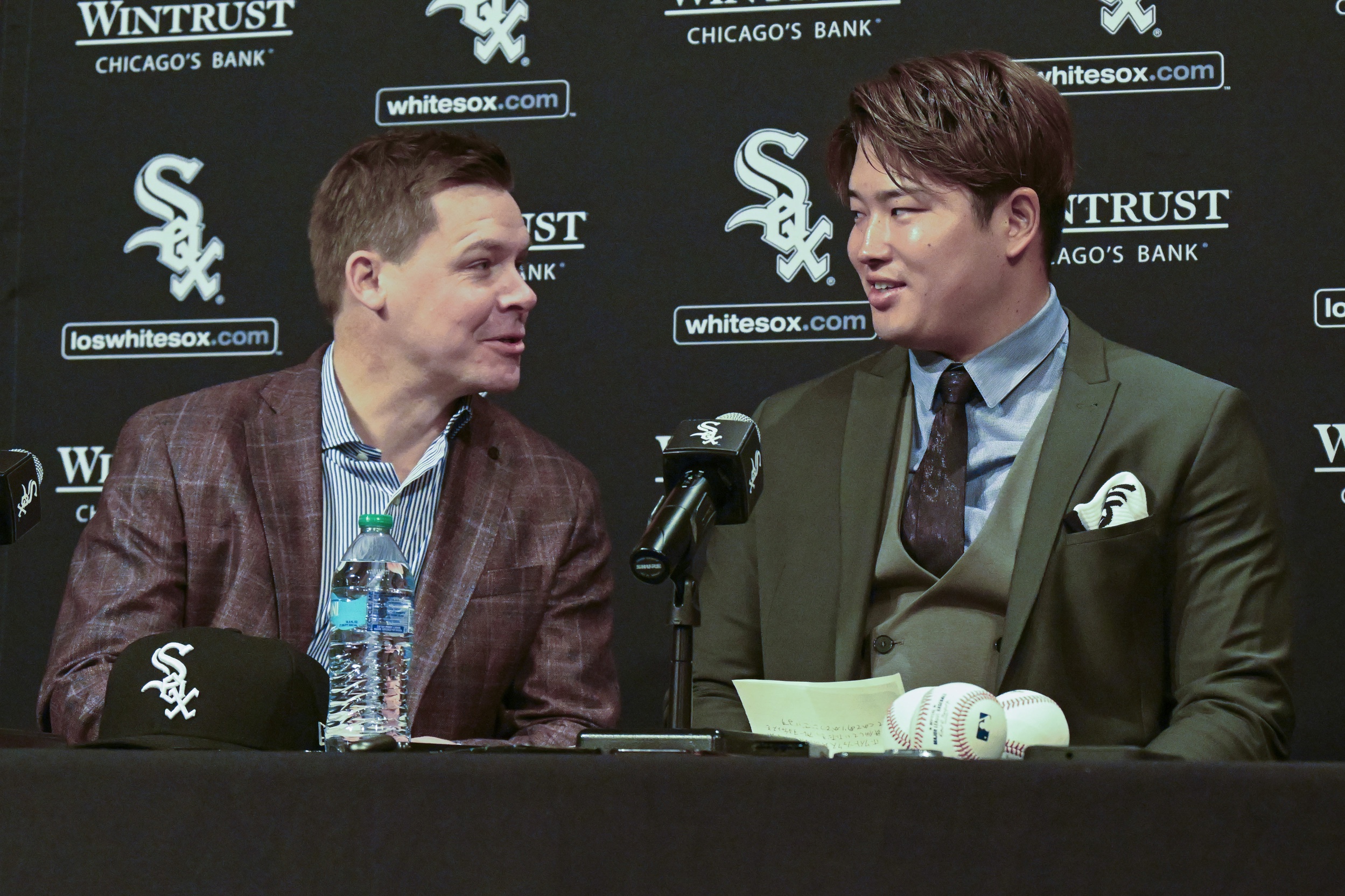
For one, Getz has spent much of the offseason not speaking not like a visionary, but getting chided for verbal foibles like saying "it cannot be understated" how important landing Munetaka Murakami and winning the draft lottery was, or repeatedly calling the very right-handed Luisangel Acuña a switch-hitter. The mistakes and their overheated fallout only wind up underscoring what his lieutenants like about their boss: that Getz is a normal man who can make mistakes when he's overly revved up, rather than a stranger hidden behind a wall of professional polish. In an environment where his collaborators already feel like they've been given autonomy to run their selected areas of expertise, they're less troubled when Getz sounds like someone who needs their help to succeed.
"He misspoke, but in typical Getzy fashion, he kind of lets it roll off his back and keep going," said assistant general manager Josh Barfield. "We’ve got a lot of momentum right now and we want to keep that going. And something like this, I don’t think it’s going to slow us down at all."
The other is that by most traditional measures of trying to suss out the long-term expectations, Getz's White Sox can feel philosophically opposed to stating their vision. When does the front office expect to start contending? When do they expect the payroll to expand? When will pursuing contract extensions with their young core will become part of the plan? None of these questions have on-record answers with more specificity than where will they play their games during the 2030 season.
Those are certainly all things the White Sox-watching public would like to know, but in drawing in new people from other organizations, the vision Getz purports to have sold is simply the work itself.
"It wasn't ever about a peak or the pinnacle of something, it was more so a commitment to improving," Getz explained. "What I've learned in the last five to seven years, people want to be part of building something. With what we've been set out to do here in the last couple years is -- you go through a rebuild phase, you build something -- it's just a reward. If you do it right, if you go about it the right way, you can reflect back and I think it's just more rewarding for those individuals to be part of accomplishing something bigger than yourself."
Getz will readily concede that it's easier now to sell that idea and convince new converts now that the White Sox have seemingly made some progress. But it's also his contention that the opportunity to truly build from the ground up attracts a certain type of person, since he is interested in a certain type of person.
"It's the quality of the person, and the competency leads to a culture in which you're constantly finding ways to create competitive advantages and finding ways to improve," Getz said. "Whenever I recognize there's an individual where it's about them and it becomes too self-serving for them, they get exposed and they weed themselves out. Because it has to be something bigger than yourself. That's the beauty of professional spots in my opinion. It's a team game, obviously on the field but it doesn't stop there."
Certainly anyone who was game to join the White Sox front office back in ... well even now, since they're coming off three straight 100-loss seasons and have a bottom-three payroll for 2026 ... has some ability to swallow their pride in pursuit of a longer-term reward. But there's also room for personal ambition in the way that the post-2023 White Sox were ripe for overhaul in nearly every area.
"I didn't want to leave Arizona, I was in a really good situation," said Barfield, who was hired away from the Diamondbacks just before their run to the 2023 World Series. "The vision that he had of building this thing up from the ground up, knowing that we were going to go through some tough times, but we're going to do this thing right, and there was going to be no backing off of that. That meant no shortcuts or just Band-Aids on problems. We were going to try and do it the right way, do it through player development, through player acquisition, and build a sustainable team here that the city could be proud of, and to be able to do it in this market with the fans and the history of the organization, those things got me going. I love a challenge."
"It was starting from a place close to zero coming off the 2024 season when I set foot in here," said bench Walker McKinven, "We all thought it was this incredible opportunity to build from all different lenses; from a coaching standpoint, from an R&D standpoint, from a systems standpoint, from a coaching personnel standpoint, in the minor leagues and player development, all of these things were ours to shape."
For all the emphasis on organizational infrastructure and expansion of research and development, the White Sox aren't keeping pace with the Yankees or Dodgers' level of staffing size, nor even shaking their reputation for being one of the smaller baseball operations groups in the league. But in an organization that had few areas that were viable, newly hired department heads were enticed by an amount of input, a level of 'let him cook' they could never be sure they'll see again in their careers.
"I appreciate Chris' ability to support us," said hitting director Ryan Fuller, hired after departing the major league hitting coach role with the Orioles. "It's been just over one year, putting people together, being able to incorporate scouting, R&D, the hitting department. Chris fosters that environment where everybody works together at a really high level and encourages that. Even the infrastructure, what we've been able to get with Trajekt, we're having HitTrax installed at every affiliate this year, all the equipment that any hitting coach would want."
"This was really the sell for me on this opportunity, Getzy in the interview process talked about getting the right kind of guys in the clubhouse," said Will Venable, discussing a remade clubhouse culture. "That's players, coaches, staff, everybody. As we've seen that become true and we continue to acquire and draft high-character individuals, they kind of run with it."
Anecdotally, from their successful intervention and resuscitation of Colson Montgomery, their identification and improvement of Shane Smith, their laser focus on the Midwest region resulting in Noah Schultz and Caleb Bonemer already out-performing their industry-perceived value on draft night, the White Sox are identifying, acquiring and developing players more effectively than before. But as is said to be a feature and not a bug, the end goal is murkier to suss out. Continually pulling -- both with players and staffers -- from organizations like the Brewers and Rays suggests a real fixation on teams synonymous with competing via operational efficiency in spite of annually light payrolls.
And it's more than a suggestion.
"You take bits and pieces from different places that have done it well, that have similar constraints in how they've been able to manage to be successful," Barfield said. "We brought in guys from the Brewers, we brought in guys from Tampa. You can see some of these smaller-market teams and how they've been able to do it. You have to know what you're good at. You have to understand to what you're good at as an organization and know how to leverage that. I think that's something we've started to lean into the last couple of years."
"It doesn't mean that there aren't lessons to be learned from the Dodgers or the Yankees or the higher-payroll clubs, because that's not true," Getz said. "But I find it really fascinating when you've got the Tampa Bay Rays, the Milwaukee Brewers, the Cleveland Guardians that are at the top of their divisions on a regular basis. That level of curiosity has certainly led to us bringing in some outside hires to create our own identity. It's not going to be a perfect blueprint of what they're doing, because I don't want it to be that way. We're still developing."
Any sober mind would conclude the White Sox should be more than willing to contort their operation if it means mirroring the Brewers' recent run of seven playoff appearances in the last eight seasons. It just might still be jarring to hear the Sox front office viewing its operation as held by similar constraints. Less than a decade ago, the Sox were pursuing Manny Machado and pledging to shop at the top of the free agent market. Now they're modeling a franchise that traded their ace starting pitcher for prospects in the wake of the winningnest regular season in their history.
As impressive as competing in this manner is for a baseball operations department, descriptions of the work involved typically sounds laborious.
"The big market teams are the liquidity and the small market teams are the product," said director of pitching Brian Bannister. "You're constantly developing, and as [players] get expensive, they go to the bigger-payroll teams, and then you just have to get quantity back, and then you just keep rinsing and repeating. You just incrementally upgrade until you keep raising your floor internally, from a win-loss perspective, where you're just a competitor in the league on an annual basis, and you don't have the these deeper win cycles. It takes good internal systems. It takes people to know what they're doing."
This sounds like a preview of very high levels of roster churn, which has typified the Rays' modus operandi, and tends to be something that fan bases both get used to eventually but still find themselves deeply appreciating the rare exceptions that crop up, like José Ramírez in Cleveland or Christian Yelich in Milwaukee.
"I’m not sure exactly, each organization is going to have its own identity," Rodríguez said when asked if he thought the Sox would become similarly transactional as his old team. "But what I will say is that a lot of the transactions were led by opportunities to get better. If it means making a transaction that allows the organization and the team to be more competitive or add more wins, whether it’s this year, or in the future, those are shots we will hopefully be able to take."
There were multiple built-in reasons in the White Sox franchise history and reality for why Getz would prefer dutifully talking about process rather than bold declarations about the future. The previous front office talked up what the fruits of their rebuild would be and that vision was publicly celebrated much more fiercely, but they were ultimately rewarded by discovering new levels to which their words could be hurled back at them. And at this juncture, the franchise's future is an added degree of unknowable.
Their stadium lease expires at the end of the decade and their efforts to woo state funding for a new facility haven't established a foothold. They face a looming ownership transition, which most of the public optimism for rests in the belief that Justin Ishbia will marshal the Sox out of operating like the small-market teams they've spent the last two seasons studying and imitating. The collective bargaining agreement also expires after this season with a potentially devastating lockout looming; though that might be one case where it's visible what sort of future they'd be ready for.
"Nobody knows what the next CBA is going to look like, but we're doing the things where we have a chance to significantly accelerate our impact on the field if the rules change, depending on what that looks like." Bannister said. "If 2027-beyond looks significantly different from a team-building perspective, from a payroll perspective for the entire league, I think the investments we've made over the last couple of years behind the scenes are going to really pay off."
"You don't know what's going to happen on the other side of a new CBA, what the rules are going to be with the restraints and the freedoms," Getz said. "To have some people that have experience in a mindset of this flexibility and maneuverability is important. But in the meantime, knowing what we can control is continual development of our players, finding ways to acquire talent that is perhaps undervalued elsewhere to find value in those players here, to either help our major league club or help us acquire talent."
Even in a future where a salary floor both raises the White Sox payroll from its current state while also limiting how much the prestige teams can blow away the competition with their financial commitment to winning, Getz said he never wants their contention to be dependent upon free-agent signings, because any roster need that can't be solved internally represents a level of failure. But even with the prevailing ascetic mindset to building a contender, White Sox leadership figures think the period where buying into Getz's vision sounds like a leap of faith, is nearing an end.
"With some of the talent we've been able to infuse into the organization, we're not as far off as some people may think," Barfield said.
"In terms of my vision coming in, I'll stick to what Getzy said and I'm not trying to put expectations on it that can be measured," said McKinven. "But I didn't come here to lose. I know that."