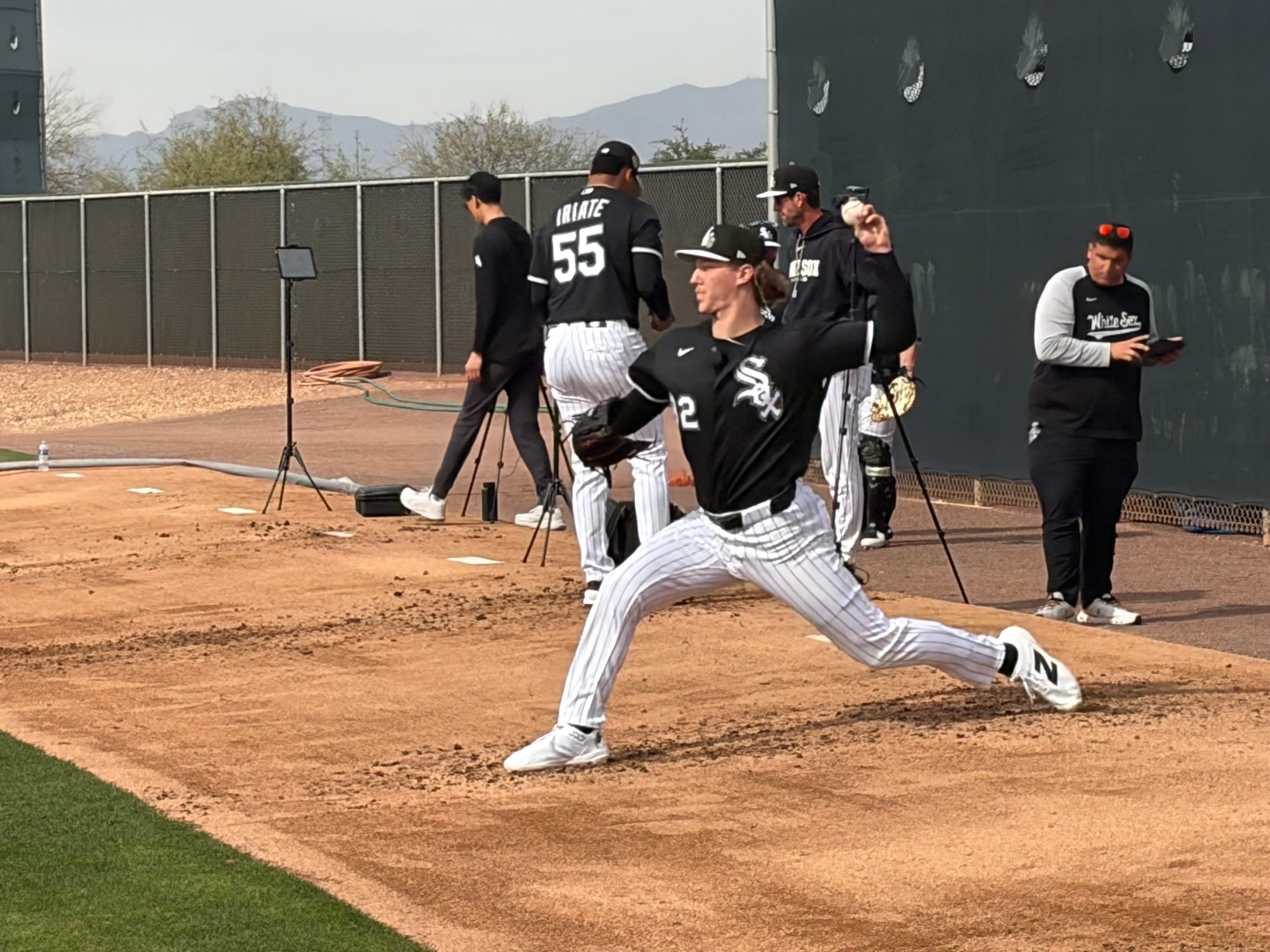
Hagen Smith's short, quick and forceful arm action is a nightmare for hitters to time up, which serves to explain why it drove a 40 percent miss rate at Double-A Birmingham last season despite sitting 94 mph with average ride.
It also explains why it felt equally trying to identify a leg kick that would sync up the upper and lower halves of his delivery, as the White Sox cycled through different options during Smith's midseason biomechanical sabbatical last year.
"We tried a high leg kick, we tried a really high leg kick, we tried to go fast and then we had to settle on a low, controlled leg lift to keep me stacked and go down the mound super easy," said Smith on the move that now sees him mostly hold in place so that his body doesn't need to rush to catch up to his arm. "With the big leg kick, yeah I was throwing hard but I was kind of all over the place. When we shortened up, everything felt good and smooth and on time."
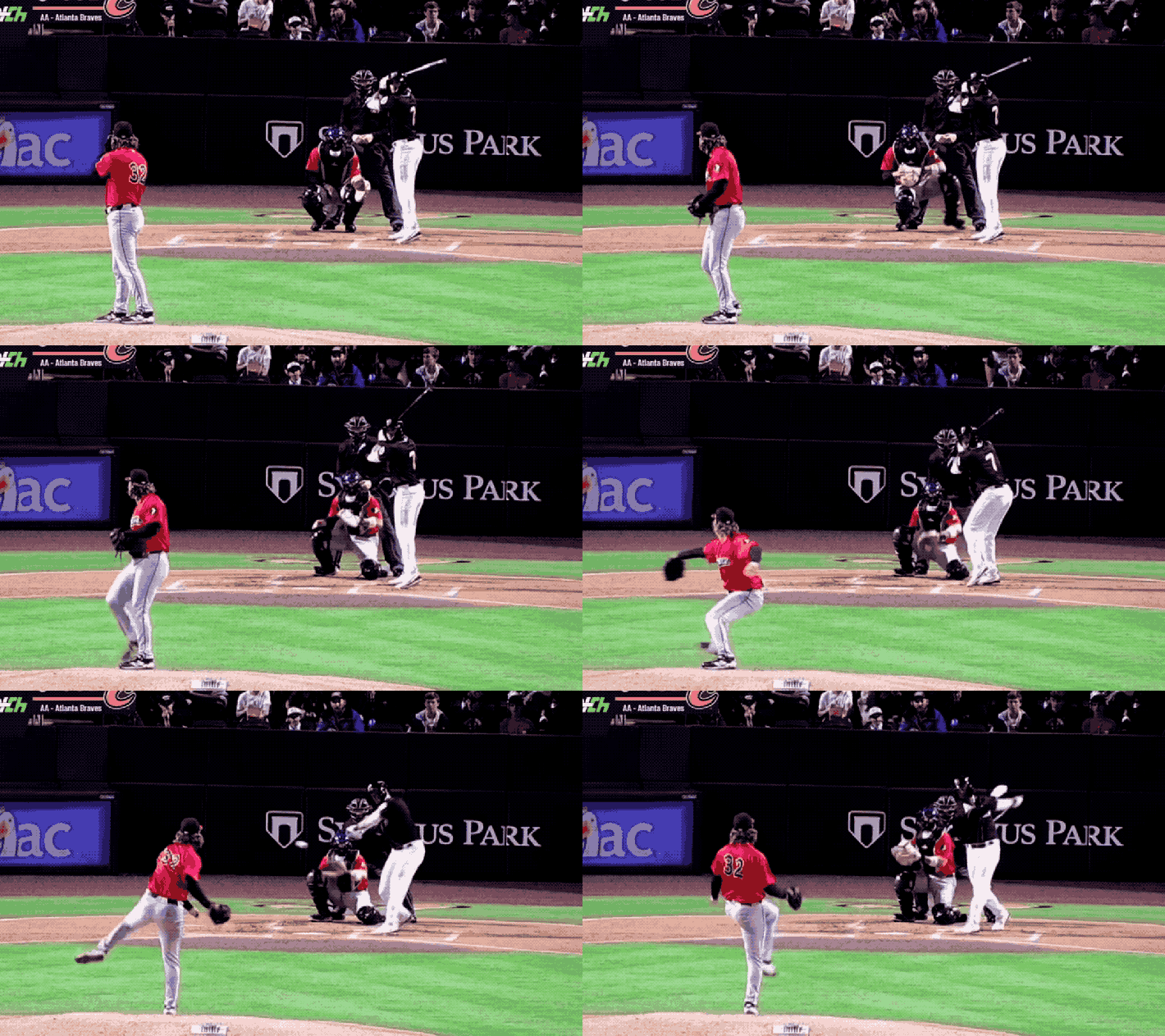
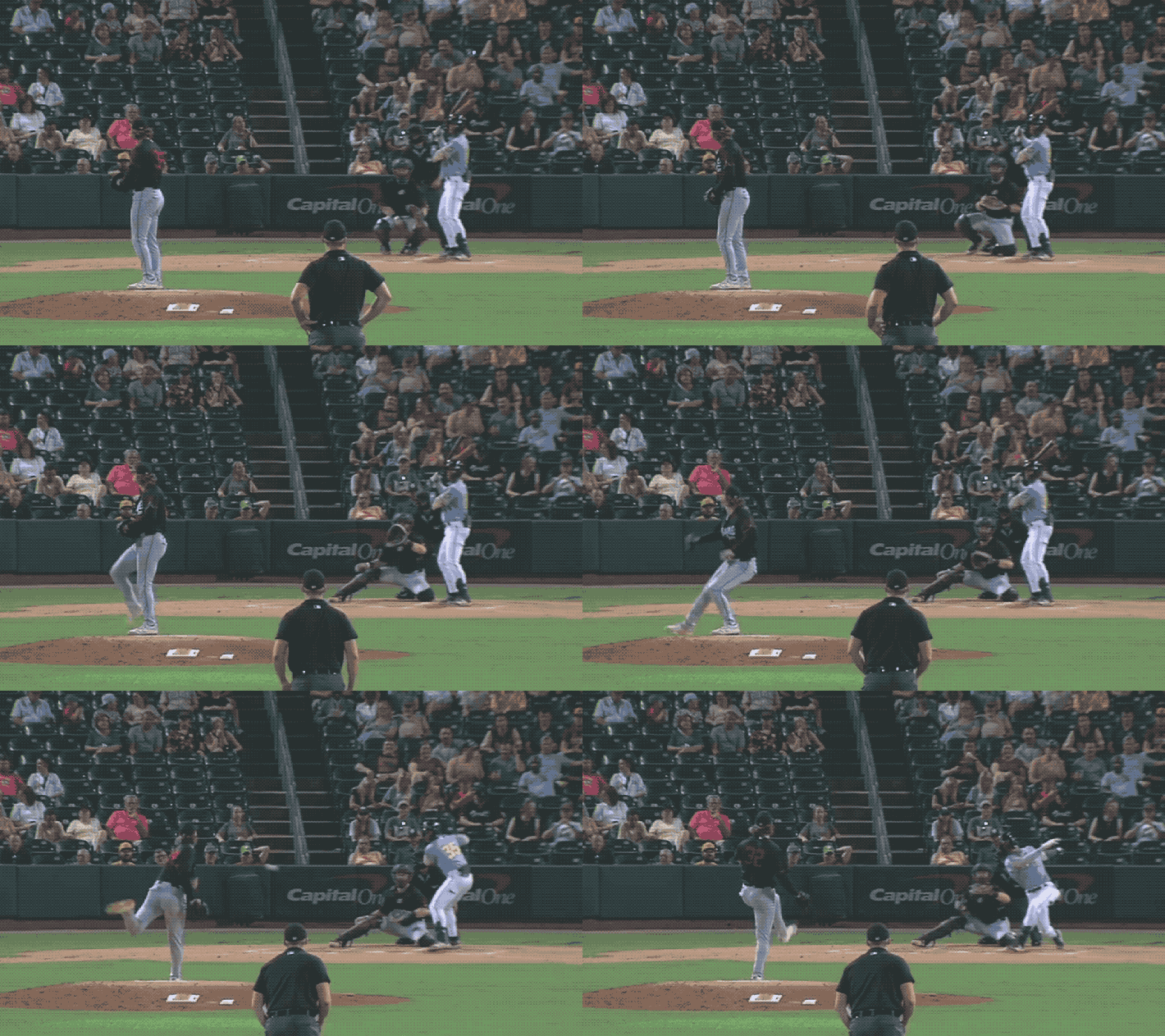
Brian Bannister has made plenty of reference to consulting with Arkansas pitching coach Matt Hobbs about Smith's mechanics, since -- encouraging Arizona Fall League performance aside -- the celebrated collegiate pitching instructor has arguably overseen the best version of the left-hander. So Smith isn't talking out of school to say that he, well, went back to school this offseason, in a trip to Fayetteville that was primarily about seeing old friends but also saw his mechanics get assessed.
"It was helpful to see where I was deficient at, where I was leaking energy," Smith said. "Throwing on the force plate mounds up there, just getting an idea of where I'm at and where I want to be."
Smith came out of the gate this spring sitting 96 mph, after that was the upper boundary of his velocity band in an otherwise strong Arizona Fall League performance, and he dipped to as low as 92 mph right before his injured list stint in 2025, so all's well that ends well. The 22-year-old is trying to take that same rationale to his first pro season being marred by a 17.6 percent walk rate and turning into a search for what his best delivery should look and feel like.
"It was a year of growth," Smith said. "Just going through some stuff helped me a lot. It's going to help me later in my career, too."
⚙️⚙️⚙️
Going into his first two offseasons as a member of the White Sox organization, Jordan Leasure could look at his most recent ERA and see it starting with a six. So while his 2025 season wasn't perfect or represent what the 27-year-old hopes is the finished product of his game, posting a 3.26 ERA in the second half, with 41 strikeouts to nine walks in 30⅓ innings, brought a little bit of a different vibe to his winter home in Tampa.
"Going into this offseason I was already stronger, and then obviously finishing pretty strong pitching-wise, I was just trying to carry that momentum in," Leasure said. "I only took two weeks off from throwing. As soon as I got back, I started training, just trying to carry that momentum from the season into the offseason. Last offseason it was trying to reset, regroup a little bit. This one I just kept rolling through. I was telling people when we left DC [the last series of the 2025 season] I felt like I could've kept playing. I wanted to keep going. So I felt like that was a good sign for the future when we want to be in the playoffs."
Lefties have been and will sort of always be a crucible for Leasure (.867 career OPS against vs. .697 for righties) as a slider-centric right-handed reliever. In 2024, he was relying on a slow, overhand curveball as his different wrinkle to use on southpaws, and in 2025 it started out as a splitter. In both cases, neither pitch became more trustworthy than a well-located slider, and since Leasure's big leap forward last season mostly revolved around slider command, maybe the best version of him is just the best two-pitch reliever he can be.
Nah, he still believes that splitter is close to coming around.
"This offseason and this spring specifically, I feel like the splitter has come a long way," Leasure said. "In the past when I was trying to throw it, it wasn't breaking, it wasn't doing anything, it was just kind of a slower fastball. Now I'm feeling out of the hand what I need to feel to have that break going down. It's the same feeling [as my fastball and slider] and that's why I like the splitter and wanted to really develop it. I like not having to think about it and I can just rip it and not worry too much about trying to make it do anything, just trusting the grip and if I have the fingers in the right spot and I throw it, it's going to do what it needs to do."
If the second half was the huge confidence boost for his process that Leasure says it was, it only makes sense that he would put it to use and try to get better.
⚙️⚙️⚙️
While Leasure will hopefully have a lighter late-game burden with the additions of Seranthony Domínguez, Jordan Hicks and a full season of Grant Taylor, another 27-year-old right-hander who throws all his four-seam fastballs at the top of the zone is trying to crack the White Sox bullpen. But Zach Franklin has a reason to be working at his own pace.
"I wish I could do college over with the arsenal I have now, I think it would be a little bit more enjoyable," said Franklin with a chuckle. "I actually had a pitching coach at Mizzou that tried to get me to throw four-seams at the top and I gave it a pretty quick try and didn't like it, just because I didn't see results immediately and got frustrated and got away with it. Then when I got here, I tried it again with [Double-A pitching coach] John Kovalik and it just kinda clicked. I did it in catch play for a couple of days and it kind of immediately clicked and felt better out of my hand and I just knew this is something I should commit to."
To command his four-seamer and build out an arsenal around it, mainly a unique spin on a circle change grip that acts like a splitter, Franklin rebuilt a delivery that had led to elbow problems over the course of six collegiate seasons, the first five of which were close to home with Western Carolina. The distinctive Garrett Crochet-style leg kick stands out, but is mostly a device to shift his weight into his back hip. When it comes to the arm stroke, Franklin wanted to make something that was easier to repeat and more deceptive simultaneously.

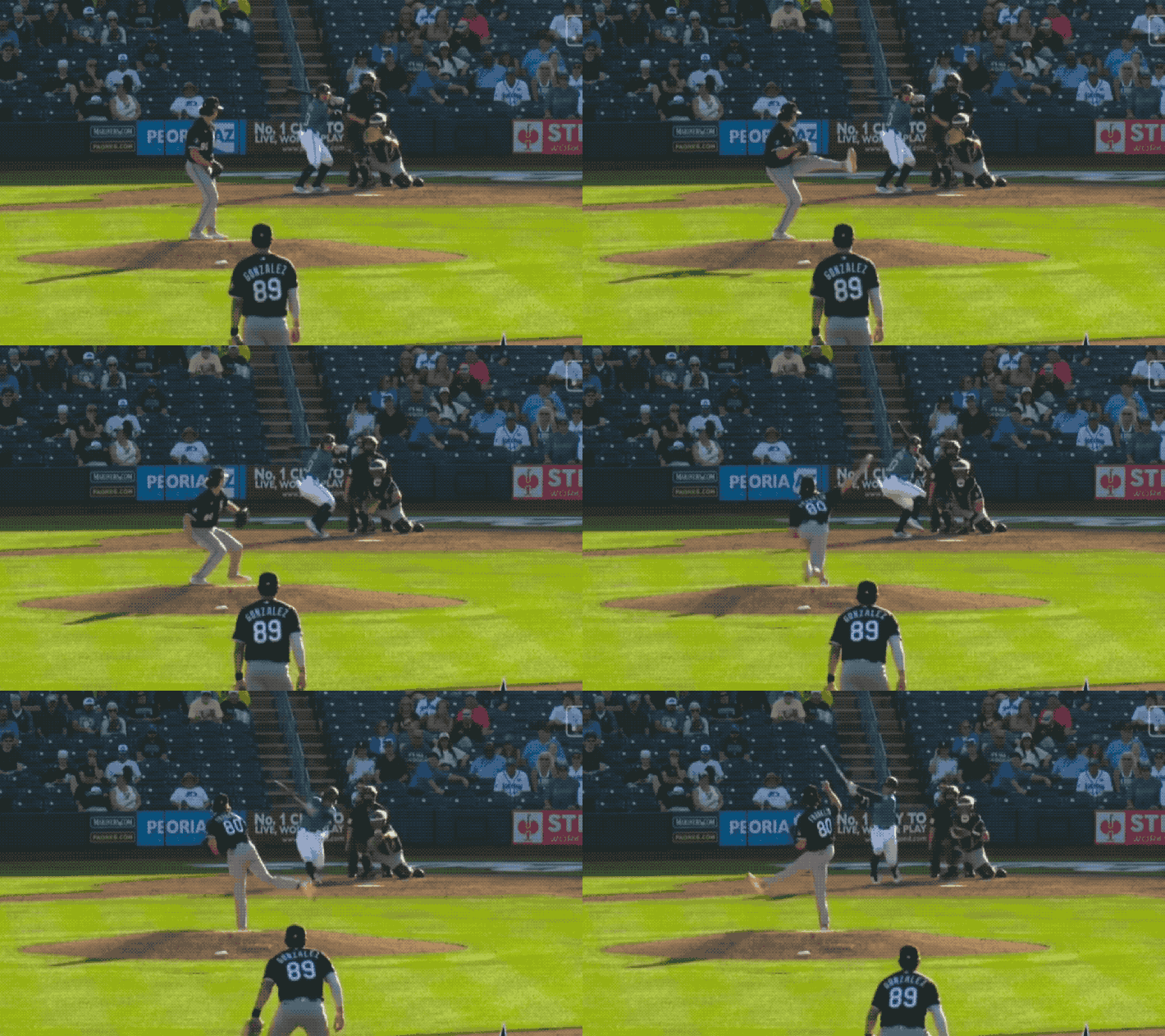
"Hitters don't really ever say much about [my leg kick], usually they just talk about how weird my arm action is, and how it looks like I'm kind of throwing it from my hip," Franklin said. "Usually you hear 'Don't change your arm action when you're changing a pitch,' but I felt like I needed to change my arm action a touch if I wanted to throw a more true four-seam. I just started trying to think how can I keep my wrist as straight as possible and keep my arm hidden for as long as possible, to add deception and help me get through the ball at release.
"It developed from keeping my arm super short and getting my hand out front at release, and it just developed as a byproduct of me trying to throw the hoppiest four-seam I can create. I already land kind of cross-body, so I thought if I stay really short with my arm, it's going to stay hidden behind my head for a pretty long time, and it gives that idea of the ball is popping out of nowhere. Because when you're moving at full speed, you're not really seeing anything until it's right out front. It can make your 93-94 mph play a little bit more like 96 mph. I need that."
Franklin isn't a surgeon with his new delivery, and throwing as many fastballs at the top of the zone as he does takes away most of his ability to control the type of contact he allows (hint: a lot of fly balls). But his formula misses bats; his 35.6 percent career strikeout rate didn't level off upon reaching Triple-A last year. With the types of bullpens the White Sox have run out for the past two years, bat-missing fastballs like Franklin's command a certain level of respect and consideration.